

THE CATHEDRAL OF SAINTS PATRICK & FELIM ENGAGES IN THE ‘ASH FOR FUTURE’ PROJECT
Saving our native ash trees (Fraxinus Excelsior) from Ash Dieback
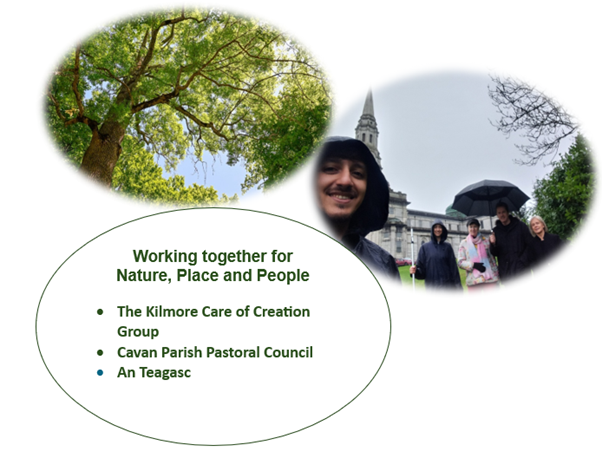
Members of the Kilmore Care of Creation Group , Patricia Keenan, Barry Kavanagh and Anne McCabe with Dheeraj Rathore and Ricardo Pimenta from the An Teagasc ‘Ash for Future’ Research Project are pictured below.
Dheeraj and Ricardo responded to the Group’s invitation to take cuttings from the healthy ash tree growing on the grounds of the Cathedral. The programme aims to develop an ash dieback disease resistant seed orchard. “The four-year, all-island research project combines genetics, forest pathology, silviculture, and public engagement to support long-term ash recovery. A unique part of their approach is the citizen science campaign, which helps to find healthy ash trees that are surviving even in areas where most nearby trees are severely affected by the disease. These survivor trees are central to their efforts to conserve ash for the future.” For more information on their team project, please click here
The core message of Laudato Si’ emphasises that ‘Everything is connected, interconnected and interdependent’ this is true: The ash tree is of ecological, cultural and economic significance to the Irish Landscape. This tree supports over 950 species. The seeds (ash keys) provide food for bullfinches, wood mice and dormice. The bark supports rich lichen communities, the leaves are eaten by the caterpillars of many moths species and the rotting bark provides much food for invertebrates. Mature ash trees often provides nest sites for the woodpecker, owl and even roost sites for some bat species. From an ecosystems perspective, the ash tree provides nutrient rich soil, and the light shade cast by the ash canopy provides a rich and thriving diversity of on the ground flora. The ash tree provides improvements in air and water quality and mitigates flooding and storm water runoff. The Ash tree is one of the most common trees found in hedgerows and fragmented woodlands and thereby acts as vital habitat corridors.