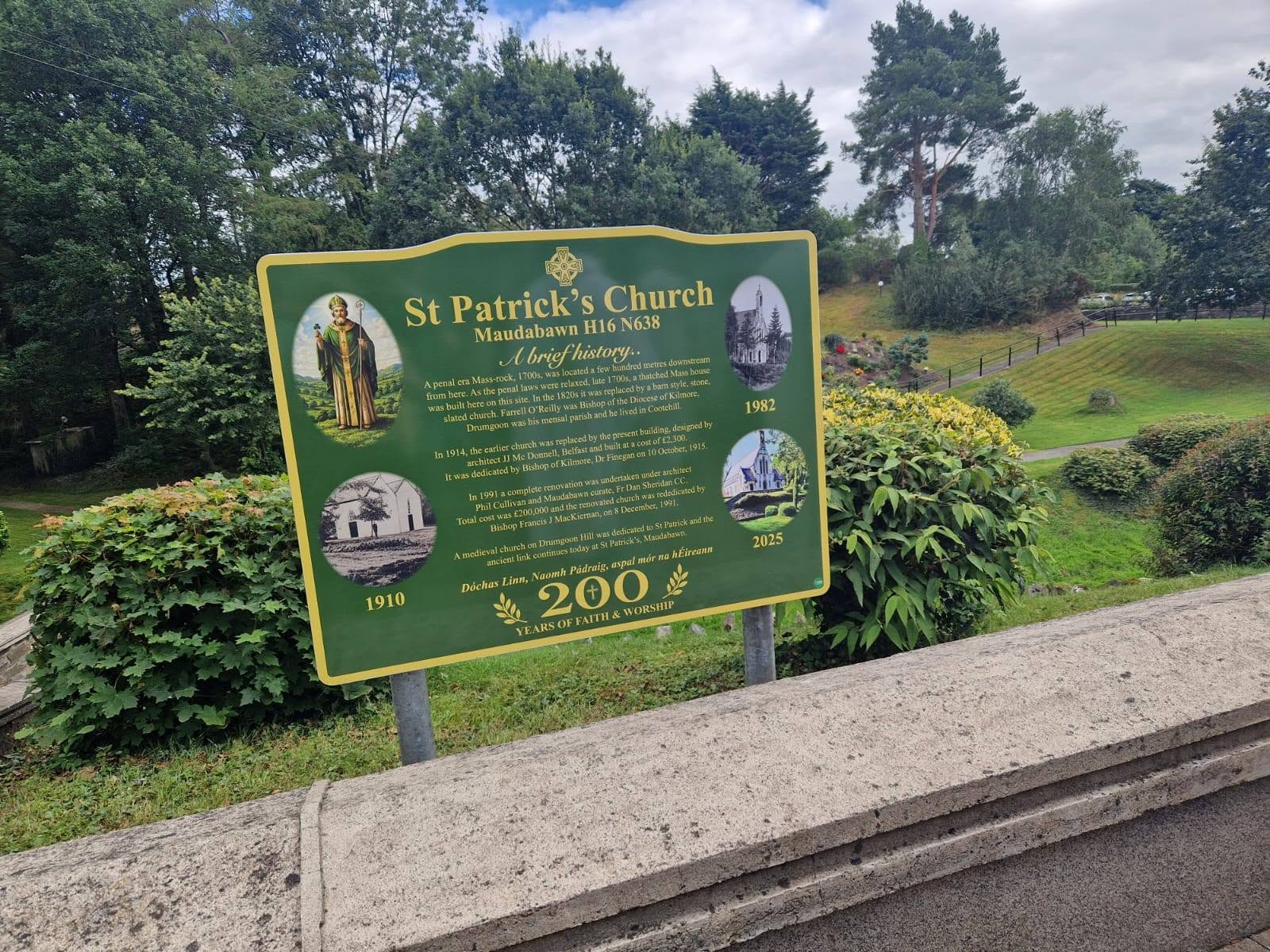
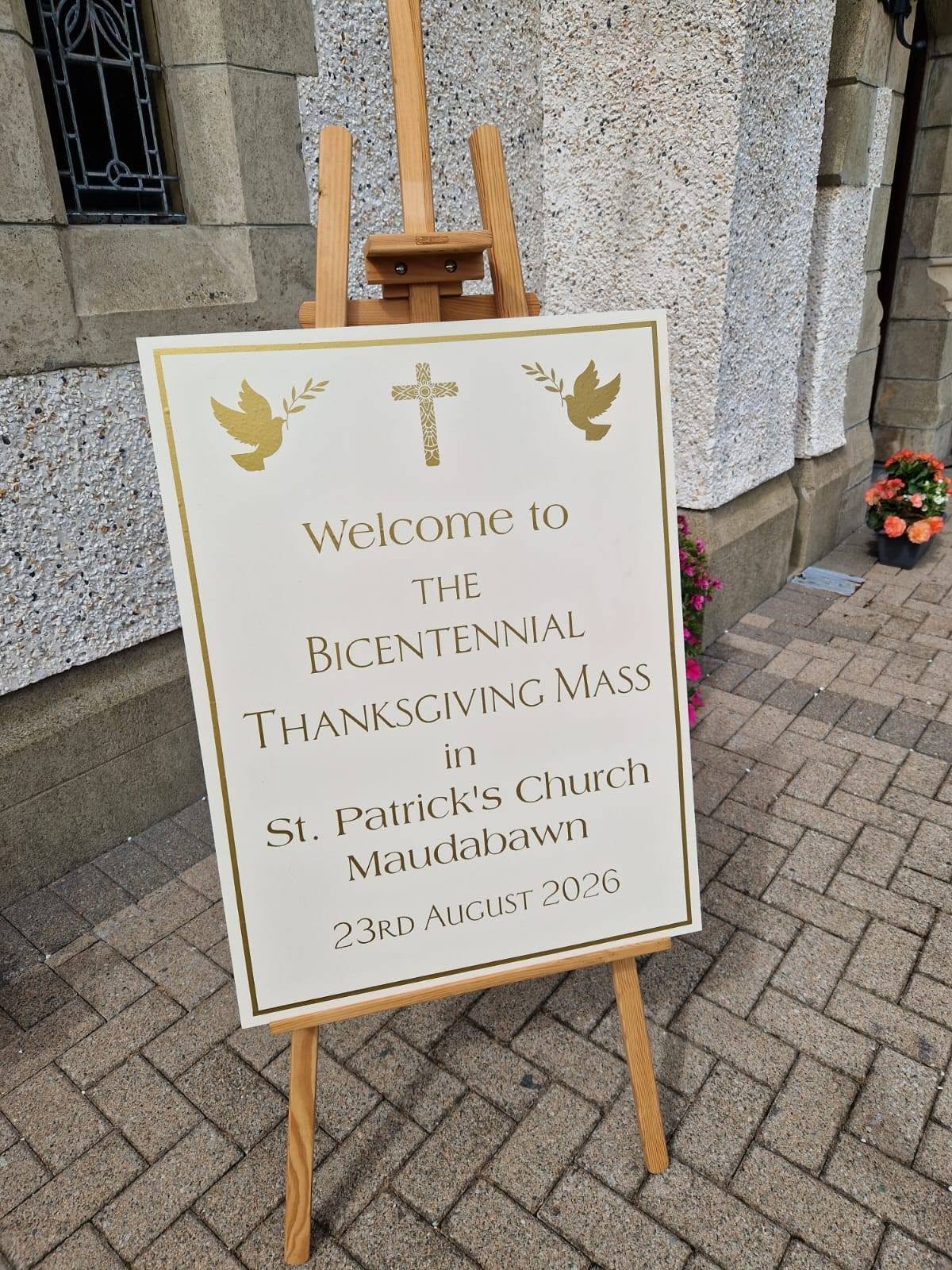
200th Anniversary of St. Patrick’s Church, Maudabawn – 21st Sunday in Ordinary Time, Year A – 23rd August 2026.
“Who do you say I am?”, the question that Jesus puts before us today. What is my response, in my head and in my heart? In our Gospel, Jesus is delegating leadership to Peter; to us, in our humanity, in our magnificent humanity! And we know, Peter did not measure up, initially at least – he had his weaknesses, as each of us has. Eventually, Peter did take up the mantle of leadership and gave his life as a martyr for our Christian faith. In our Gospel Peter was bestowed with the gift of priesthood, the mystery of granting forgiveness. Peter had recognised Jesus as the Son of the living God and that he received the gift of leadership from Jesus.
The key point here is delegation from Jesus. We too have been delegated with our ministries, each of us gifted and delegated in different ways to look out for others. Our celebration today of 200 years of St. Patrick’s Church, Maudabawn is a testimony to how you and previous generations as people of this locality and parish have been leaders in responded to God’s call.
Our first reading raises the bar regarding standards of leadership. We are reminded to be aware of our responsibilities with the reference to Shebna who was dismissed from his office because of his attempts to glorify himself rather than look after those entrusted to his care. Our leadership is bestowed on us by God so that we can care for others. We are entrusted with ensuring the common good.
It is a key message of Pope Leo in his encyclical letter on AI in which he emphasises that we are of God and called to work for the common good of everyone. The title of Pope Leo’s Encyclical Letter is Magnifica Humanitas (MH), meaning Magnificent Humanity. Pope Leo’s purpose in addressing AI, (artificial intelligence), is, firstly, to highlight that we are created by God with a restlessness within us to do good and secondly, to clarify that we each have limits or weakness within us that do not require correction by AI (MH 11 & 12). (We are preoccupied with being perfect – why not embrace our imperfections? as is the message of the new Rose of Tralee, Caoilfhinn Ní Choiligh).
Staying with the scriptures, the Word of God, in our second reading, St Paul calls us to reflect upon who is God, again alerting us to our place before God. We know only too well that one of our significant weaknesses is that we think that we are God! Rather, we hear in our second reading that ‘All that exists comes from God; all is by God and for God’. So, life is not all about me or about us! Rather, according to Pope Leo in Magnifica Humanitas, we are called to be in communion with God which we discover in sincere self-giving (MH 48). Indeed, Pope Leo emphasises that our human dignity, is “simply by virtue of existing….of having been willed, created and loved by God” (MH 52). Just kneel / sit / stand before God in prayer.
We celebrate our belonging to God and to each other and the source of that belonging in the mystery of Christ by being nourished by the Eucharist, the Mass. Pope Leo writes, “The Eucharist, which is the sacrament of unity, nurtures our belonging to the Body of Christ and teaches us how to share” (MH 88). You have had that experience and most especially in recent months as you prepared for this celebration of the 200th anniversary of St Patrick’s Church, Maudabawn. I congratulate you in your appreciation of the Mass, of this place which nurtures your faith and that of your families. May we continue to celebrate our belonging in the Mass, the Eucharist.
To conclude, our default position must be to celebrate our faith, our being of God, our Creator, who entrusts us with the care of others, the common good, which is nurtured in the Mass, the gathering to receive of Jesus Himself, the Son of the living God. What we are about today, and into the future as faith communities is captured in our Opening Prayer of the Mass, “that our hearts may be fixed on that place where true gladness is found”. Jesus asks us today, “who do you say I am?” Today, as we celebrate how we have responded, we pray that we may continue to respond!